Showing posts with label HEALTH. Show all posts

9/02/2016

Posted by Unknown in | 9/02/2016 No comments
Obviously, you know that smoking is indeed injurious to health. The health ministers and related people have shouted until they could do no more. The researches have spent millions of dollars getting the truth out for you to see how a ciggarate can damage your internals and externals. It has been proven over and over again how smoking can be a deterring factor socially, economically and healthwise. Despite that, you still hold a ciggarette with pride instead of shame.

So, it's time to ask yourself, "What is stopping me from quitting killing myself and others around me?" (Yes, that's what a cigg basically does, makes you a coward and a murderer! Remember, a cell is  a living unit too!)

Let us analyse some of the most common but lesser talked about responses. 

1. "I always want to quit but I keep postponing."
Are you one of those who believe in "Let this be the last cigg? I will quit from tomorrow or a set date/day?" Well, for your information: Tomorrow never comes! So let that moment be NOW! Let your last cigg be the one you had smoked the last time.

2. "One cigg can't kill me."
Is this your mantra? Well, you are fooling yourself. Not only one cigg, but a single puff can harm your delicate lungs. Recall when you smoked for the first time, all that chokes, cough and reflexes?  Great, now you got my point! Besides, how do you know which particular ciggaratte actually turned that cell of yours into cancerous? Stop Now!

3. "I smoke only when with friends."
If you are a teenager and often find yourself repeating this statement every time you are being asked about your smoking habits, then beware! It could be just the start of a long addiction! Your proud statement should be "I don't need a ciggarette to prove how cool I am."

4. "Smoking is cool."
Sorry, Mr. Fool but smoking isn't cool at all. Infact, smokers stink and that's why you rush to look for a mouth freshner soon after smoking. Check out your fingers, lips and teeth after smoking for years. Oh and did I forget wrinkled skin and burnt lungs? Did you know you can actually have poor eyesight because of smoking and the chances of damaged blood vessels and heart problems?

5. If it weren't for ciggarate,  could you have been a proud owner of a brand new Ford Fiesta or a Chevrolet Sonic? Let's see how. Here is a quick and simplified calculation (I am no mathematician).

Suppose a pack of 20 cigg costs you $10 (cost varies per brand and country).
You smoke a pack every other day (underestimating,  as people smoke more than this!)
So, 
In one month =15 packs= $150
In a year, $150 x 12= $1,800
And you've been smoking for the past 10 years? $1,800 x 10 = $18,000 

Wow, now that makes you a rich guy! 

A Ford Fiesta, Chevrolet Sonic or SUV costs just around $18,000. 

Now, that makes you a fool! Buying a rolled slow poison in a piece of paper which burnt you and itself, giving you and your loved ones chances of ill health while all this time you could have saved and had a wonderful, healthy and a luxurious life! What a waste! Isn't it? Of course, it hurts you more now because you know you have wasted more money than I have exemplified. 

Moreover, the bonus that ciggaratte gives you is a wrinkled, stained, ugly stink, blinded, bedridden with excessive cough and perhaps emanciated self due to an oral cancer!

That's an amazing returns for investing hundreds of hard earned dollars into tobacco with piles of ashes as the interest!

So, what you waiting for? Quit NOW! Never look for a ciggarate or tobacco related products again. Infact, don't look for an alternative,  simply stop the habit. Remember to say NO to smoking! Smoking is injurious to health, even your ciggarette packet has that as a statutory warning.

Courtesy: QuoteAddicts

3/31/2016

Posted by Unknown in | 3/31/2016 No comments
Being diagnosed with a chronic illness can be heartbreaking and devastating. After the initial shock, questions like why me? How did I get it? may arise. The situation is usually confusing, depressing and scary. The mind wishes for it to be some kind of an erroneous information. 

It takes time for the new information to sink in. Most times a person with chronic illness goes through a series of emotional phases throughout his life, struggling with the mind-heart battle. The life becomes like day and night with some healthy days and some painful ones. How to then live a happier life with a chronic illness?


Understanding your illness.
As I always say,  knowledge is power. Having correct and complete information about the disease helps one to decide the correct approach to tackle the anticipated symptoms. Mental preparation for the possible course of the illness and its presentation helps one be on the guard rather than being taken by suprise. 

Medical knowledge is no longer a secret. It's widely available in libraries, online (caution: Don't believe everything you read online, always cross check), through a health professional or through patient associations.

Know your treatment options and their limitations. The limitations of the treatment options and their possible side effects are more important to know as the lack of this is what often leads to depression. "I am following my treatment regimen religiously but despite that I still am not recovering as I had expected". This and other similar demotivating thoughts often leads to depression in the long run. This leads to the third most important point: What else apart from drugs can I do to boost up my health?

Often leaving everything on a doctor sitting in an office and regular treatment courses doesn't suffice. Many chronic illnesses require proactive efforts to complement the treatment. Take your illness as a challenge and face it bravely. Maintaining a healthy diet, regular exercise (where permitted), healthy and supportive social relationships and mood boosting activities are all necessary to lead a good quality life.

Keep a diary.
You can call me a pen fan but writing down what works well and not so well with your body and then discussing it with your doctor can provide a better understanding to both of you. As every individual reacts differently to a disease, tailoring your personal treatment plan makes you feel more in control of your disease and you feel more motivated to follow the self-discovered method that gives you the comfort.

Emotional control.
The initial shock and disbelief often gives way to anger, fear, grief, confusion, regret, depression and frustration.

In such times turn to meditation, yoga, healthy social support, spiritual support and pleasing activities. In testing times, have faith and know that relief is bound to come after pain. Choose the company of people who understand you and your problem while avoiding those who stress you out. You might have limited energy and time for socializing so why not use it wisely?

Acceptance.
The secret of living happily with chronic illness is acceptance. Accepting the fact that you have the condition is the first step towards attaining mental peace. Acceptance simply means recognising the presence of the illness within you and not thinking, 'I have the disease and so it's the end of my life.' Acceptance is not a one time thing  but in fact, it is an ongoing process and you may have to keep reminding yourself every now and then of your limitations. For instance, certain activities may no longer suit you because of your condition.

Acceptance also helps you look at the various treatment choices that you may have and taking appropriate actions in order to be healthier. It helps you be practical and constantly in touch with reality.

Adaptability.
Acceptance paves way to adaptability. Adaptability is all about making changes to your old routine so that you set a healthier new norm. You now find yourself being strict about taking your treatment on time, turning to positive social support, keen on self-care, considering fine arts, meditation, music, taking up a new hobby and personal development.

You may explore psychological, financial, emotional and spiritual dimensions more seriously. You need mental strength and positive thinking. The mind is a powerful tool. Channel all your thoughts down a positive stream while blocking any negative thoughts that try to obstruct the flow. This helps you stay away from depressive bouts.

Learn to live with hope and faith. Make most of every waking moment that you have. Remember that not all problems have permanent solutions but temporary remedies are still better than nothing. Never give up because life is beautiful and worth living even in the worst case scenario. Finally, constantly remind yourself that after every night there is always a day that follows.


1/13/2016

Posted by Unknown in | 1/13/2016 No comments
Every person will have negative thoughts at some point in time which are usually short lived and get resolved after some time. When the negative thoughts persist and become overwhelming or start interfering with a person's daily routine, is when it becomes a problem that needs intervention.

Intervention could mean seeking professional help by mental health experts or/and self management. 

Here, will focus on self management of the negative thoughts. What you can do to help yourself from these negative thoughts:
  1. Have an insight.
  2. Dig out the root cause of these thoughts.
  3. Replace them with positive thoughts.
  4. Reinforce positive thoughts.
Let's look at each of these in details.
1. Have an insight.
Knowing and accepting that you have a problem and its depth is always a stepping stone to any problem solving. If you accept the problem then only it will be logical to go ahead and look for its solution. Hence having an insight is a problem half solved!

2. Dig out the root cause of the negative thoughts.
This can be a bit uncomfortable.  When you are having many negative thoughts, sometimes it becomes necessary to sit down with them and 'filter' through to see which one is the loudest and the most troubling one. Usually the rest of the thoughts are built on and around this particular one.

Our thoughts are based on our judgement and opinions of the external world.

Suppose your negative thought is 'People want me dead.' Ask yourself these questions:
Is this thought true? If so, what is the evidence?
Will my best friend or spouse or mother agree with it? If not, why not? What are their reasons for calling this thought false? Is this thought important?
Is this thought useful?
Why am I having this thought? Try and recall past events to which you may be relating this thought. Tell yourself that these are your beliefs, worries and fears and the more you listen to them the more realistic they will start to sound.

Learn to dissociate yourself from your thoughts. Remember you are not the thought. If your negative thought is, 'I am a loser.' Tell yourself that, 'You are having a thought that you are a loser.' There is a difference!

3. Replace the negative with positive thoughts.
Before you do this, you need to let go of your negative thoughts. There are many ways to do this, most of which aim at making your negative thoughts appear silly, useless and baseless enough not to deserve a place in your mind.

Here are some of the things you can do to get rid of these negative thoughts.

  • Close your eyes and place your thoughts on imaginary balloons and let them fly off. See them fly off in your mind's eye and feel the happiness it gives you. You may smile everytime a negative thought leaves your mind.
  • You may turn your thoughts into a song.
  • You may voice them out in a funny way.
  • You may write them down on a piece of paper and let the water wash them away cleansing your mind off them.
Now that your mind is lighter, let's see how we can convert the weakening negative thoughts to positive ones.

Suppose your thought is 'My business is never going to prosper.'  Reframe this thought into a positive one and say it aloud, 'I will do my best to make my business a successful one.' The idea is to reframe negative thoughts as they come and change them from a problem to an opportunity. The more you practice the more easier it gets.

Do not view thoughts in black and white. Most of the time we think in terms of all or nothing like you could be thinking, 'He did not respond to my call because he hates me.' Consider another possibility like, 'He could be busy and I will try to call him later.' Do not jump to conclusions easily without cross checking your assumptions.

My personal favourite quote is "Everything happens for the best". This encourages me to try and see the brighter aspect of a problem. Not always are we able to see the good that could be hidden in a problem. During such times I tell myself that even though the situation looks bleak right now, I am sure some good will come out of it later.

You may memorize your favourite positive quote and say it aloud everytime you have a depressive thought or situation.

Writing down your positive thoughts in a diary and going through them frequently helps build positivity.

4. Reinforcing the positive thoughts

  • By simply practising the writing, reading and thinking positive over and over again everytime you feel a negative thought is creeping up your mind can reinforce positivity. Remember that, you will always have negative thoughts,  we all do. Just learn to let them go and keep the mental traffic clear. You aren't weak just because you are having a repetition of them.
  • Keep yourself busy. As the common saying goes: Empty mind is a devil's workshop, it is good to keep doing  pleasurable activities in your free time. You may plan your daily activities to include reading a good book, watching funny shows, reading jokes or positive quotes, exercising or playing your favourite sport or talking to your friend.
  • Remember that a healthy body harbours a healthy mind. To keep yourself fit is of utmost importance and hence you must eat well, drink plenty of water, sleep atleast 7 to 8 hours a day and exercise regularly. If you are on any medications for health reasons do take them regularly and be in touch with your health professional as adviced. 
  • Go easy on yourself. Forgive yourself whenever you make a mistake.  It's in human nature to err. Learn to let bygones be bygones. Dwelling on the past and worrying about the future simply wastes your present. Learn to enjoy your present moments.
  • Appreciate yourself daily. Stand in front of a mirror and say affirmative things to yourself like 'I am going to be successful.' 'People find me charming.' 'I am confident.' 'Nothing is permanent, not even my problems.' Smile more frequently, it is a fastest mood booster.
  • Congratulate yourself on your daily achievements. Set goals for good deeds and treat yourself upon completing them. For example you could help needy or distribute sweets to school children or spend sometime in an orphanage/mentally or physically challanged institute. This way it gives you a chance to realize your virtues and be grateful for what you have. Realising that others have bigger problems than yours automatically makes your problems seem insignificant and silly enough to magnify.

A critical point to note is: if you are having suicidal thoughts or thoughts which involves destruction, violence and harm to others than it is time to seek a mental health professional's advice without further delay.


Posted by Unknown in | 1/13/2016 No comments
Feeling low or sad can be a natural, short-lived reaction to a loss, struggles of life, a substance (drug side effect) or a medical condition.

Depression, on the other hand is loss of interest in activities that you once enjoyed along with an intense depressed mood with feeling of hopelessness, helplessness and worthlessness most of the day, daily for atleast about two weeks.

Some of the other important features include:

  • Significant weight gain or loss (without any special diet adjustments).
  • Lack of sleep or excessive sleep.
  • Behavioural changes like agitation or slowed down.
  • Feeling fatigued most of the time.
  • Feeling of extreme guilt and worthlessness. 
  • Decreased ability to think, concentrate and make decisions.
  • Frequent thoughts of death, suicide and attempts of suicide.
  • Great distress and difficulty in functioning in daily life e.g. at home or at work.


Luckily depression is treatable. A mental health professional can help you feel better again with medications, psychotherapy, exercises and brain stimulation therapy whichever is applicable to you.

The key factor that usually repeats the episodes of depression is the impact of the negative thoughts.


How can you help yourself from falling into this dark pit called depression?

Depression is a double edged sword with both its causes and effect having roots from psychosomatic factors.

However, the key factor that usually causes its repetition is the impact of the negative thoughts clouding the individual’s thinking ability. Below are some of the techniques you can adopt to overcome such thoughts. Mind you,  it is not an easy task to do away with these thoughts but practice makes perfect.

The first steps in any mental disorder are the most difficult ones but also very crucial for the individual's recovery.

Insight and help seeking behaviour are the cornerstones of the well being of any mentally disturbed patient. By insight, I mean the ability to accept the knowledge that "I am mentally unwell, whatever I feel and experience is not the sole reality and that I need help." Seeing a mental health professional doesn't make you 'crazy' as the common belief goes. It simply means that you need someone who knows how to pull you outta this deep dark hole. While most people may not be able to understand your worries and experiences, a psychiatrist or a psychologist knows exactly what you go through.

Depression is a quicksand that keeps pulling you down the more you struggle alone. It is best to calm down, reflect on your situation and seek external help. Talking to the closest person to you often helps. Express your doubts, worries and fears. Don't be afraid of being ridiculed. If the person is close enough they can see what you going through and help you out.

Seek company of positive people. Those who are always optimistic and cheerful can uplift your mood.

Spend free time doing things that you enjoy. This will give you less time to think and sink further. Take a walk with your pet, revive your old hobbies, join a yoga class or practice meditation, enjoy music and dance along, you can even cook a new dish!

When depressed, it's common to go to extremes of anything.  Take control over your habits. Say you don't need to overdo or underdo things. Eat well, sleep well, exercise and keep yourself fit and smart. Avoid indulging into smoking and alcohol consumption as this makes your situation worse. A good make over boosts self confidence. Pamper yourself.

Group discussion on how others with similar problem overcame theirs is another way of sharing your burden and learning new ways of combating it. It's always good to remember that you are not alone.


If you are having suicidal, destructive or violent thoughts or thoughts of harming others, you should immediately seek medical attention. Mental health professionals are the right people to help you recover and gain back the control over your life.


1/07/2016

Posted by Unknown in | 1/07/2016 No comments
Stress has become part of our lives with or without which work can not be done. You will be wondering why I have mentioned 'with' and 'without' in the same sentence. That's because stress can be good or bad. Yes, good stress can motivate you to do things while bad stress pushes you towards ill-health. 

This discussion, however, is about the bad kinda stress that makes your heart go boom boom boom and your blood pressure skyrocket, you find yourself anxious and irritable even more if you already are of the nervous personality.

Did you ever find yourself in a situation when you felt that the whole universe is conspiring against you and targeting your day to be one of the worst? Like you woke up late, missed your breakfast, the traffic was a killer and the rain didn't do much to help but soak you to the core, moreover your boss practiced his shouting skills on you while your collegues watched and you of course hadn't met the deadlines! It could get worse you know. You go to your desk with your head hung low with shame, anger and frustration but wait a sec! There are things that can actually get you outta this mood almost instantly! 

Now lets throw a glance at 10 of such things that can help you shake off this bug called stress.

  1. Breathe deeply. Yes, one of the quickest and the most effective ways to de-stress at your desk. Breathe in, hold for as long as you can then slowly breathe out. Just concentrate on breathing (you may choose to close your eyes) and feel the difference the oxygen makes. 
  2. Visualize a pleasant scenario.  Say, you on a hammock at the beachside with the vast, calm ocean and cool breeze soothing you. Research shows that mental peace perception calms down the agitated nerves.
  3. Mind your posture. Sit up straight with head held high, back straight and feel the confidence gaining on you. Slumped posture is a reflection of a loser and depressed individual and you definetely aren't one.
  4. Eat a banana. Now that's not 'cause you had missed your breakfast but essentially it is rich in potassium which helps to lower your blood pressure. Remember to keep a banana handy.
  5. Stay hydrated. Water is always our best friend. From flushing toxins to keeping our skin glowing it also helps in combating stress. After all what can you achieve feeling cranky and lethargic? Keep a 1 litre bottle on your desk and aim at drinking 3 fulls per day.
  6. Scribble away. Draw a messy pic or just doodle. Researches show when the mind does the aimless work the body actually unwinds! Look busy but do nothing, isn't it an awesome way to beat the boss!
  7. Chum up with old pals. Another way to slack off is just a phone call away. Call that friend that you have been meaning to and catch up! Revive old memories and bingo! You're on the road to recovery.
  8. Music. A wonderful getaway for anyone anytime. Classical (soothing) music is the prescribed treatment for stress management but any finger-tapping number can get you all energezied and relaxed.  What's more, you can even sing along!
  9. Practice muscle relaxation. From toes to head tighten and relax all your muscles stepwise.  It helps relieve stress especially for those suffering from anxiety and depression.
  10. Shut the world out. Close your eyes and sit back relaxed. Think of a steady candle flame and focus on its tip. See the light brigthen as it engulfs your dark thoughts and brighten your very being. Five-ten minutes of this short focused meditation rejuvinates you to the core and sharpens your focus.
Try these tips anywhere anytime convinient and feel relaxed and more focused.

You may pen down your personal favourite tip of desk relaxation in the comment box below.

11/17/2015

Posted by Unknown in | 11/17/2015 No comments

With the advancement in technology and the sea of knowledge at fingertips, its difficult to stay away from modern gadgets like ipad, smart phones, tablets, TV and the like in day to day life. Recent researches show that both children and adults are falling prey to screen addiction.

The negative impact of screen addiction is overshadowed by the immediate colourful and exciting experience that these gadgets have to offer. Though it is true that to some extend we should all be in touch with the ever-escalating and overwhelming tech know-how, but its always important to remember that too much of anything is harmful.

Children are more vulnerable to this negative impact and it is more difficult to detach them from such an addiction. Todays' generation even more so, as they are more adamant and more exposed to friends having similar gadgets.

Parents/guardians are the key role-player in noticing such a problem in a child and guiding them out of it gently.

What are some of the signs of gadget addiction?

  • The child is mostly found with the gadget.
  • Child disinterested in anything else apart from his gadget. He may need to be prompted for meals or a shower.
  • First thing in the morning and last thing in the night he seeks the company of his gadget.
  • Outdoor/group games, his favourite sports or spending time with books are no longer exciting to him.
  • He is found playing with his gadget even on a picnic or family gatherings.
  • Slowly his grades start to fall and frequent complaints from school teachers regrading his dropping academic performance. 
  • Frequent lying about his gadget time.
  • Easily angered and gets upset when can't access his favourite web content or is offline. 
  • Argumentative and defensive everytime gadget time limit is discussed.
What are some of the side effects of screen addiction?

  • Behavioural problems
  1. Mood swings while offline and online.
  2. Shouldering passwords and gaining access to inappropriate contents.
  3. Fighting with siblings over its use or throwing tantrums when asked to stop using gadget.
  4. Finding excuses to increase gadget time.
  5. Misusing gadget time. Hiding gadgets every time a parent appears.
  • Increasing aggression: studies show that those children who spend more time playing violent or aggressive games tend to behave more aggressively with peers and family. Such children are more adamant, rude and insultive to both parents and teachers.
  • Disturbed sleep pattern. Sleep is vital part of growth and rejuvination of our bodies. Sleepless nights/days because of excessive chats/messages causes exhaustion and a dull next-day even in adults. Likewise, sleep-deprived children loses focus in class and gradually end up having poor academic performance.
  • Obesity: an increasing problem among teenagers is attributed partly to gadget addiction and sedentary lifestyle. Children instead of cycling out and having fun are found glued to TV gobbling down junk food and sugary drinks!
  • Depression: As teenagers misses out on friends and family and competes on buying less affordable gadgets, slowly they detach themselves from the outside world, start feeling lonely and ultimately become depressed.
Digital detoxification
It is important to understand that any addiction does not go away in a day. Time, patience, vigilence and repeated reinforcement helps. The idea is not to isolate and punish such children but to gradually show them the importance of more practical life for their age. One important point to note is: handle them in such a way that they do not end up thinking of you as their enemy.

  • Set some firm rules. Declare areas as gadget free zones such as dining table, bed, prayer room etc. Insist that meal times are family times and use this time to have positive and constructive discussions and share words of encouragement. Recall happy & funny moments from previous outings, make future holiday plans or praise the child for good performance at school. Ask for and consider child's opinion too.
  • If the child is obsessed with TV, cut down TV time for the whole family. You may allow thrice in a week 1 hour TV time of children friendly channels. Its imperative that adults follow these rules too.
  • Monitor sleeping hours. Do not allow gadgets while going to bed. Remove any gadget on a child's bed while sleeping. Although there are contradictory reports from various studies regarding the harmful effects of the electromagnetic radiations emitted by electronic gadgets, but why take the chance? Its proven that sleep disturbances are indeed caused by such gadgets, which suffices to rectify our habits for better sleep.
  • Keep the child occupied in a "manually" building projects of his interest. Depending on their age and gender you may choose simple projects and assign them tasks. Praise your child's efforts every now and then, you may wish to reward them at the completion of it. 
  • Spend quality time with your child. Give them your undivided attention whenever you are around them. Play with them, take interest in their school work, watch over while they do their homeworks and assignments, ask if they need help, figure out ways to find solutions, its okay to play a video game with them sometimes.
  • Plan your day out. Include activities that your child wants. 
  • Organise or attend family get-togethers. Its important for a child to know that he has cousins and gets to spend time with them. 
If you fail to de-addict your child despite all your efforts, seek advice from the de-addiction centres. They have more structured approach for the same.

Lastly, it's important to introspect your own habits as a parent/guardian and change them if necessary. Let them not be following in your footsteps as far as gadget addiction is concerned.

11/05/2015

Posted by Unknown in | 11/05/2015 No comments


Test your knowledge on diabetes here.

  1. What is diabetes mellitus?

  2. lot of infection in blood
    a metabolic disorder with high blood sugar levels
    a metabolic disorder with low blood sugar levels

  3. Which age group can have diabetes mellitus?

  4. adults
    children
    both

  5. Is diabetes mellitus curable?

  6. yes
    no
    sometimes

  7. How can you know if you have diabetes mellitus?

  8. you need to have expensive body scannings
    have to get hormonal studies done
    have a blood test checking for fasting and post prandial blood sugar levels

  9. What are some of the risk factors for diabetes mellitus?

  10. central obesity
    family history of diabetes mellitus
    both a and b above

  11. Type II diabetes mellitus is caused by?

  12. no insulin production by the pancreas
    inability of the body to use the produced insulin
    being in close contact with a patient with diabetes mellitus

  13. What is gestational diabetes?

  14. high blood sugar levels after delivery
    high blood sugar levels during pregnancy
    high blood sugar levels in childhood

  15. People with diabetes mellitus are prone to

  16. damage to the kidneys, eyes and nerves
    frequent opportunistic infections and poor wound healing
    both a and b above

  17. Treatment choices for diabetes mellitus include

  18. oral hypoglycemics medications
    insulin injections
    both a and b above

  19. How can patient with diabetes mellitus help himself?

  20. regular blood sugar check ups and exercises
    diet control and treatment adherence
    both a and b above
If you found the above article informative, please Like it. Enter your email address below to get a mail alert every time an article is posted.

11/03/2015

Posted by Unknown in | 11/03/2015 No comments


MythBuster


Myth: Cataracts can be removed with laser.
Fact: A cataract is cloudication of the crystalline lens. Its removal needs a surgical incision and vision is restored by replacing it with an intraocular lens. Cataracts cannot be removed with laser.

Myth: A cataract must be "ripe" before it can be removed.
Fact: The correct time for cataract removal in adults is when it interferes with your daily activity and obstructs clear vision. However in children, cataracts should be operated on as soon as possible to prevent poor vision due to lazy eye (amblyopia).

Myth: Constant wear of eye glasses can weaken your eyes and make you dependent on them.
Fact: You are advised to wear glasses because of poor eyesight. Wearing them not only gives you a clear vision but also prevents further eyestrain and asthenopic symptoms. Your lens prescription may change overtime as per your age or disease independent of your glass wear. Constant wear of glasses doesnot weaken your eyes.

Myth: Children outgrow crossed-eyes (squint).
Fact: Misalignment of eyes (strabismus/squint) in children is a sign of visual problems. An ophthalmologist consultation is needed in such cases to establish the cause and its proper treatment. The earlier the problem is addressed the better the visual and cosmetic outcomes.

Myth: Eyes can be transplanted.
Fact: Eye as a whole cannot be transplanted as it is connected to the brain via Optic nerve which once severed can not be reconnected. Only part of an eye, the cornea, can be transplanted in some specific cases.


Posted by Unknown in | 11/03/2015 No comments
STEP V: SELF-EVALUATION

It's good to keep track of the effectiveness of your efforts from time to time. You can set your own self-evaluation period and may choose to keep a diary as well.


  • Key point to remember: weight loss=calories burnt>calories consumed.
  • Remind yourself of your long term goals every now and then.
  • Cheating is allowed occasionally, provided you do not overdo it.
  • Avoid alcohol and smoking.
  • Say NO to drugs.


Few tips to avoid your efforts-graph from declining:
  • Get into slim fit wear: keeps you motivated to achieve that ideal figure!
  • Buy yourself a weighing machine. Check regularly and enjoy the subtraction!
  • Click and compare before and after pics. You may pin them in your diary.
  • Check to see which food plans are more convenient for you e.g. You may choose to skip rice for a week or two and see the difference.
  • You may modify your exercise plan by combining new and old exercises e.g aerobics plus weight lifting.
  • Alternatively, incorporate more calorie use in your daily routine like prefer to walk to work rather than using your vehicle and save fuel cost! If you are using public transport, than you may get down a station before and walk to work.
  • Its good to remember that this is a long term weight loss plan, you may not look like a model in one or two weeks. So have patience.
  • Set realistic and achievable milestones and congratulate yourself upon reaching them. Share the good news among friends and flaunt the new you in your favourite outfits.

As you keep repeating and modifying steps I-V, it will become a healthy habit and you will always be fit! 


10/30/2015

Posted by Unknown in | 10/30/2015 No comments
 STEP IV: ADD ON SOME EXERCISES

Weight loss plan is incomplete without exercise if one is to achieve some agility & fitness. Healthy eating can make you appear leaner but what's the point if you feel weak and have to drag yourself places! 


For some, the very thought of exercising brings along all the reasons for not doing it! Most common excuse being no time for workout while to others the word exercise brings visions of dumb-bells and heavy gym equipments. 


There is a need to change this view and think of exercise as part of your daily routine. You can actually execute some simple exercises in your office as well. Remember it all adds up!


  • Exercises are best executed in groups. This keeps you motivated. Joining a gym, a group or pairing up with a partner is a good idea. 
  • If you are planning to go solo, than CDs, DVDs or various exercise programs videos can be helpful.
  • If you have gym equipments at home use them while listening to a fast number to race up your heartbeat.
  • Remember exercise need not be just weight lifting, you could opt for yoga, aerobics or any dance style of your choice like salsa or tango.
  • If these are still not your cuppa tea than worry not. The idea is to keep moving your body so that you burn more and more calories than you consume. Hence, if you are at home you can help with washing, sweeping, cleaning, mopping and doing the dishes!
  • Ever thought of gardening, cleaning your car or mowing the lawn? These activities burn a lot of calories. 
  • Take up a hobby. Go swimming, play badminton, tennis or go cycling with kids.
  • Take stairs whenever there is an option.
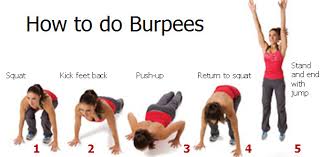
  • Those TV commercials have now an added advantage, you get to do jumping jacks, crunches or burpees while your seat gets a breather!
  • Walk as if there is a lion after you. Well, not literally but yeah I'm talking about brisk walking. Thirty minutes a day is good enough, but if you can't do it at a stretch than walk briskly every time you do.
  • Weight lifting is a good resistance exercise that helps tone up muscles while loosing weight. If you don't have professional dumb-bells/weights try lifting your kids or moving that furniture around the house or try lifting a sack of rice.
  • Kids are the best exercise-mates. Find time to spend with them and enjoy the games that you used to play as a kid. Hide and seek, musical chairs, kabbadi, frog race, sack race, long jumps, high jumps, racing, langdi, kho-kho/leapfrog and tug-of-war are good calorie burners.
  • Whenever free in the office make a habit of walking around, change seats, walk about while talking on the phone, do squats in your cabin (very effective for abs), do sets of tricep dips, wall push-ups, jog in place, fist punches, standing leg curls, oblique abs fix etc. These are easy non-sweating exercises that can be done while wearing a suit!
  • You can do breathing exercises too while at work.


And here is your final step to stepwise weight loss!


10/21/2015

Posted by Unknown in | 10/21/2015 No comments
STEP III: EATING HEALTHY

Got tired of dieting and gaining back the lost weight and probably more? Well, don't be disheartened as you're not the only one, there are many people out there with the same story. 

Instead of going on a diet plan for a few days and gaining back those calories later, why not opt for a healthier diet daily and maintain both weight and fitness? Sounds logical & more beneficial right?

What then should be your daily diet like?
  • The most effective way to loose weight is by consuming more proteins. Regardless of its source, whether pure, plant, milk or quality proteins, incorporate them in your diet. Among other benefits they fuel fat & calorie burning. You may jumpstart your breakfast with choices like eggs, skimmed milk, low fat Swiss cheese etc. 
  • A lot of latest researches suggest that drinking coffee has several health benefits. One such is metabolism boost up! Hence, have that sugarless black cupa-coffee happily. 
  • Go Green. Rich in powerful antioxidants that improve your body & brain functions, green tea health benefits are no longer a secret. So why not get used to the sugarless version of it?
  • Much demonized coconut oil has recently been crowned as a healthy all-rounder. Studies have shown that it does not only burn fat, decrease appetite and aid in weight loss but also keeps the heart and skin healthy. Try replacing your cooking oil with coconut oil.
  • Avoiding sugar is almost impossible as it occurs in many food items like rice, bread and pasta. But you can avoid its direct consumption from sweets, sugary drinks and desserts. Sugar in any quantity activates a hormone insulin which has a fat storing function in the body hence, the more sugar you down the longer you stay in fat-storage mode.
  • Eat less refined carbs like white bread and white pasta.
  • Prefer low carb diet like spinach, carrot, broccoli, salmon and fruits.


  • Remember, fibre is your friend. High fibre keeps you fuller for longer, cuts cholesterol and aids in blood sugar control. Incorporate in your menu, items like brown rice, whole wheat pasta, chapati/pulka, popcorn and oatmeal.
  • Fill your plate with healthy vegetables and fruits. Alternatively, you may choose to use them for snacks. Instead of going for chips, pizzas and burgers you may munch on carrot or cucumber sticks or opt for an apple.
  • You may supplement your meals with whey protein.
  • Eat more of real food. 
  • Fresh fruits and veggies like oranges, onions, red bell peppers, broccoli & spinach are rich in antioxidants which play an important role in prevention of diseases, ranging from cancers to Alzheimer's.
  • Do not diet, instead eat healthy. Diet plans and their effects are short lived with rebound weight gain in the long-run. On the other hand, eating healthy may not immediately give you the desired effects but ultimately it will keep you healthier and fitter.

Click here for the next step.

10/18/2015

Posted by Unknown in | 10/18/2015 No comments
STEP II: QUANTITATIVE REDUCTION OF FOOD INTAKE


Sounds simple doesn't it? It can be a tricky business. Reducing food quantity suddenly can make you hungrier and you might end up snacking a lot every now and then which can be pretty disastrous to your weight loss plan. However the following tips can help you make a smoother transition into this step:

  • Drink water before every meal. Naturally it will make you feel fuller and you may actually eat lesser.
  • Cut down the quantity of food that you serve. If you're used to two helpings of an item, go for one instead.
  • The smaller the better. Use small utensils to cook and serve. Be it a spoon, plate or cup go for the smaller size.
  • Eat while standing. Sitting down at a dining table usually gives a mental preparation for a lengthier meal time and chances are, you'll keep filling and refilling your plate.
  • Another trick is to serve the food on plate from kitchen and eat away from it. This discourages the urge to go for the second trip!
  • After a few mouthfuls, engage yourself in other activities e.g. recheck your office presentation or go see if your kids have finished their homework. The idea is for the brain to get enough time to register that food has been taken in. The longer you are away from the next bite the more the chances that satiety will set in.
  • Be aware of what you eat. Always think of the amount of oil, salt, sugar and calories that you are consuming. Alternatively you may choose to count calories too. It helps to set a limit.
  • Learn to say NO! Tell yourself that you definetely do not need extra calories from the tempting treats within your reach. 
  • Chew your food slowly. This not only gives time for satiety to set in but also treats your taste buds. After all eating should be a pleasurable experience! Moreover, scientifically speaking well chewed food is easier to digest.
  • Brushing teeth after dinner also helps to cut down the urge for late night snacks.
  • It is wiser to snack frequently than have large 3 meals.
  • Share your meals while eating out, makes you eat lesser and saves your hard earned cash.
  • Do away with tempting appetizers, desserts, side dishes and condiments.
  • Avoid starters, instead go for the main course straightaway. In case that's not avoidable than opt for a salad for the starter. Alternatively you may regularly eat salad before your meals.
  • Cut down on eating out. Prefer to cook your own meals. Its both healthier and cheaper.
  • Clear pantry of all the junk food instead stock with healthier options.
  • Remember buffets aren't your option. Its hard to resist all those choices and its tempting to eat to get your money's worth.
  • Prefer blander meals, the less tastier the food the lesser chances of eating more.
  • Avoid your kid's leftovers! Very common way to add more calories in the name of why-waste-food. Serve lesser to kids in the first helping, they can always go for the second helping if needed.


Here is the next step after you have successfully learnt to eat less.

10/15/2015

Posted by Unknown in | 10/15/2015 No comments

  • Whatever the reasons may be for your weight loss, its wise to try and make it sustainable.
  • There are lots of fad diet plans out there which can get you in shape within short period of time but are definitely not healthy nor sustainable choices.
  • So what's the wise choice? How should a stepwise weight loss program be like? Let's see:
STEP I: DETERMINATION (80%), EXERCISE & DIET (20%)


Its all about mindset. Ask yourself few self-testing questions like:
  • Have I had enough of being overweight? Do I want to look slimmer, smarter and confident?
  • Am I willing to change my dietary habits and adopt a new healthy lifestyle?
  • Am I ready to overcome my addictions?
  • Am I willing to dedicate few minutes of my time to exercise?
  • Do I strongly wish to fit back in those favourite outfits that no longer fit?
  • What should be my ideal weight for my age, height and gender (refer to online charts/calculators) and am I determined to reach it?
  • Is weight reduction necessary for me? Is it medically adviced?
  • Am I free from any stressful situation right now? As emotional/mental/physical/financial or any kind of stress could be one of the reasons for your weight gain.
If you've been nodding your head in agreement throughout then congratulations! You are ready to embark on the weight loss plan. Determined you are! And yes, it is indeed time to change.😀


10/12/2015

Posted by Unknown in | 10/12/2015 No comments
Introduction:

Thyroid gland is a butterfly shaped gland located in front lower part of the neck. It synthesizes and releases thyroid hormones (T3/triiodothyronine and T4/ thyroxine) that ultimately affects body metabolism.

Hypothyroidism or underactive thyroid disease is common and occurs when there is an insufficiency of thyroid hormones.

Causes of hypothyroidism includes Hashimoto's thyroiditis (autoimmune disorder), radiation treatment to the neck area, certain medications like lithium, amiodarone, IL-2 & interferon alpha, surgery (total or partial thyroidectomy), dietary deficiency of iodine, pregnancy, (postpartum thyroiditis), congenital hypothyroidism (structural or functional), pituitary gland disorders and in extremely rare case disorders of hypothalamus.

Risk factors:

  • Females (commonly elderly)
  • Increasing Age
  • Race (Asian/White)
  • History of close family members with autoimmune diseases
  • Personal history of autoimmune disease
  • Prematurely greying hair
  • Down's syndrome
  • Turner's syndrome
  • Bipolar disorders

Symptoms of hypothyroidism can be tricky to associate with the disease as they are vague and often mimic other conditions. 

Symptoms in adults:
  • Constipation
  • Dry skin
  • Dry hair and hair loss
  • Difficulty in losing weight or unexplained weight gain
  • Changes in menstrual cycle
  • Depression
  • Irritability
  • Decreased libido
  • Muscle cramps/aches
  • Fatigue
  • Cold intolerance
  • Slow heart rate
  • Anterior neck swelling (goitre)
  • Carpel tunnel syndrome
Symptoms in babies:
  • Cold extremities
  • Hoarse cry
  • Constipation
  • Extreme sleepiness
  • Floppy infant
  • Little or no growth
  • Poor feeding habits
  • Puffy face
  • Persistent jaundice
  • Bloating of stomach
  • Swollen tongue

Diagnosis therefore can be done with simple blood tests which measures thyroid hormones T4 (thyroxine) and Thyroid Stimulating Hormone (TSH). If need be, a thyroid scan can also be done.

Interpretation of thyroid test results:
  • Lower than normal T4 implicates hypothyroidism
  • Elevated TSH levels with normal T4 implies subclinical (mild) hypothyroidism.
Treatment
Supplementary thyroxine in form of pills with regular monitoring and titration until the correct individual dosage has been established.

Complications of untreated hypothyroidism:
  • Joint pains
  • Obesity
  • Infertility
  • Heart problems

Poor mental development in a baby could be due untreated thyroid problems in the mother during pregnancy.

Most severe form of hypothyroidism called myxedema can be life threatening and lead to coma, hypothermia and ultimately death if left unaddressed.


10/05/2015

Posted by Unknown in | 10/05/2015 No comments
What is CVS?
Its a condition experienced by many of those working at least 3-4 hours daily in front of a digital screen.
In the era of digitalization where computers, laptops, tabs, mobiles etc have become the trend, its inevitable to face one or more of CVS symptoms at any one point in time. 

What are the symptoms of CVS?
  • Eyestrain
  • Redness of the eyes
  • Tired eyes
  • Irritated eyes
  • Blurred vision
  • Dry eyes
  • Watering of the eyes
  • Headache
  • There can be associated neck, back and shoulder pain/ or stiffness.

Why such symptoms?

Our visual system is designed to relax while viewing faraway objects (6m) while near work imposes strain on it. When this strain persists for extended period of time, the system experiences strain that is manifested as the symptoms.


Improper lighting, less frequent blinking, incorrect distance of the workstation, incorrect body posture and uncorrected eye problems all contribute to worsen the symptoms.


How is CVS diagnosed?

A comprehensive eye examination with regard to an individual's working distance is needed to establish this diagnosis.


Consult an Optometrist or an Ophthalmologist for the ocular evaluation.


What is the treatment?

There is no one standard treatment that suits everyone with this problem. Modification of factors that contribute to the symptoms is the main approach while lubricating eye drops are frequently prescribed for symptomatic individuals.


Things that you can do:


  • Use of ergonomic furniture and workstation to attain correct body posture in relation to your working distance and device. (refer to the illustration)


  • Adjusting overhead lighting/brightness/contrast such that there is no glare. Avoid direct light on face and screen. To further minimize the glare one could tilt the digital screen or use and anti-glare screen filter where applicable.
  • Frequent blinking which helps in avoiding dryness of the eyes.
  • 20/20/20 Rule: take frequent breaks in between work. Look at objects 20 feet(6m) away every 20 minutes for 20 seconds.
  • Walk a bit, stretch your arms, legs, back, do simple exercises with your neck and shoulder to avoid stiffness and pain of these parts.


How can an eye health worker help you?

  • Comprehensive eye examination helps to detect and treat any ocular problems that could be contributing to your vision problem. For example, if you are found to have long sightedness appropriate spectacle prescription can give you clear vision which stops any further strain on your visual system.
  • Lenses with tints/coats/correct power/ prisms can relieve and prevent strain.
  • Eye centres also offer vision therapy for those with eye focusing and coordination problems.
  • An ocular lubricant may also be prescribed to you if your symptom warrants it.

Search

Bookmark Us

Delicious Digg Facebook Favorites More Stumbleupon Twitter